
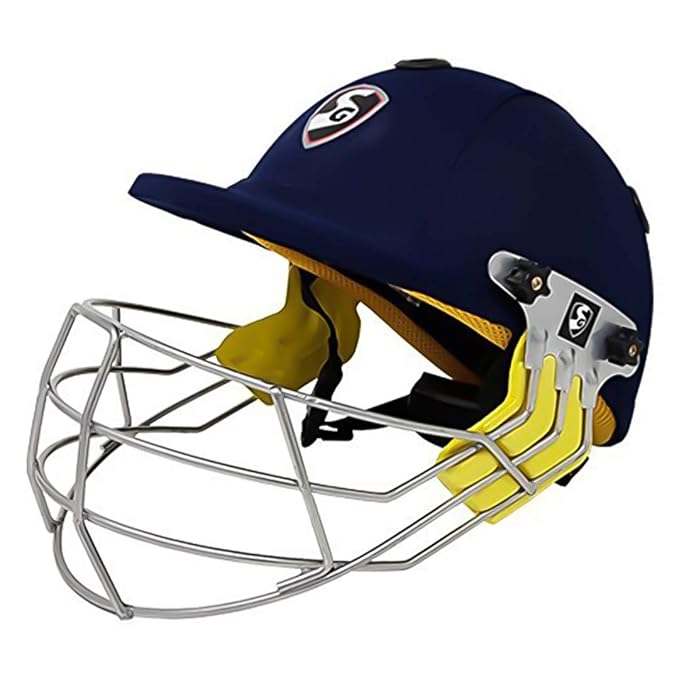
High impact polypropylene shell. Fully adjustable steel grill for superior protection. Protective impact-resistant and sweat-absorbent with special sweat mesh breathable inner padding.
“ager-Smith PB 2000 Combo Aluminium Badminton Racquet with Tempered Steel Shaft & Featherlite 2Durable Aluminium Badminton Racquet for Smash Control” has been added to your cart. View cart
SG Smart Cricket Helmet
₹1,289.00 – ₹1,499.00Price range: ₹1,289.00 through ₹1,499.00
SKU: N/A
Category: Sports Gear
Description
🏏 Cricket Helmet – Maximum Protection with Comfort
A cricket helmet is an essential piece of safety gear for every batsman and wicketkeeper. Designed to protect your head, face, and jaw from fast deliveries, a high-quality cricket helmet ensures safety without compromising on comfort. Whether you’re playing professional matches or practicing in the nets, choosing the right helmet can make all the difference in your performance and confidence.
⭐ Key Features
-
Strong Outer Shell – Built with high-impact resistant materials to absorb shocks.
-
Lightweight Design – Ensures comfort during long innings.
-
Adjustable Fit – Customizable straps and padding for a secure fit.
-
Face Guard Protection – Sturdy grill to shield your face from bouncers and edges.
-
Ventilation System – Airflow channels keep you cool during intense games.
🎯 Benefits of Using a Cricket Helmet
-
Enhanced Safety – Reduces risk of head and facial injuries.
-
Confidence at the Crease – Focus fully on your batting without fear.
-
Comfort for Long Play – Lightweight build with cushioned padding.
-
Professional Standard Gear – Approved designs for matches and practice.
🔹 Amazon/Flipkart Style Bullet Points
-
✅ Durable & Lightweight Cricket Helmet – Ideal for professional & beginner players.
-
✅ Shock-Resistant Outer Shell – Maximum protection against fast balls.
-
✅ Adjustable & Comfortable Fit – Perfect for players of all ages.
-
✅ Sturdy Face Grill – Protects jaw, teeth & eyes.
-
✅ Ventilated Design – Stay cool during long batting sessions.
Cricket, known as the gentleman’s game, is a sport of grace, skill, and strategy. But behind its elegance lies an element of risk. Fast bowlers hurl balls at speeds exceeding 150 km/h, and batsmen face the constant danger of injuries. Among the protective gear that has evolved over decades, the cricket helmet is arguably the most crucial. It protects the head, face, and brain—areas that can suffer life-threatening damage if unprotected.
This article provides an in-depth look at cricket helmets: their history, significance, modern innovations, standards, buying tips, and their role in enhancing player confidence.
The Evolution of Cricket Helmets
Early Cricket and Lack of Helmets
Cricket began in the 16th century, and for centuries, players wore no protective headgear. Even into the early 20th century, batsmen faced fast bowlers without helmets. Injuries were common, but tradition and “toughness” discouraged innovation.
The First Helmets in the 1970s
Helmets emerged in the late 1970s when batsmen like Dennis Amiss and Tony Greig experimented with motorcycle helmets and customized headgear. Kerry Packer’s World Series Cricket was instrumental in popularizing helmets, as fast bowlers like Dennis Lillee and Jeff Thomson posed real threats.
Helmets in the 1980s–1990s
By the mid-1980s, helmets became standard for batsmen. They evolved from heavy motorcycle-style designs to cricket-specific models with faceguards. Brands like Gunn & Moore, Gray-Nicolls, and Masuri began producing specialized helmets.
Modern Era: Safety Meets Comfort
Today’s helmets use lightweight materials, carbon fiber, titanium grills, and advanced padding. They are mandatory at all levels of professional cricket, not just for batsmen but also for close-in fielders and wicketkeepers standing up to spinners.
Importance of Cricket Helmets
-
Head Protection – Prevents concussions, fractures, and fatal injuries.
-
Confidence Boost – Allows batsmen to play short-pitched deliveries without fear.
-
Compliance with Rules – Helmets are compulsory in international cricket.
-
Protection for All Roles – Not only batsmen but also wicketkeepers (close to stumps) and fielders use helmets.
-
Prevention of Tragedies – After incidents like Phillip Hughes’ death in 2014, helmets with additional neck guards became widely used.
Anatomy of a Cricket Helmet
A modern cricket helmet consists of several parts designed to absorb and distribute impact forces:
1. Shell
-
Made of carbon fiber, fiberglass, or polycarbonate.
-
Provides the first line of defense.
-
Lightweight yet strong enough to withstand fast-bowling impact.
2. Inner Padding
-
Cushions the skull and reduces shock.
-
Made from foam or gel-based materials.
-
Ensures comfort during long batting sessions.
3. Face Guard/Grill
-
Constructed from steel or titanium.
-
Protects the face and jaw.
-
Adjustable for visibility and comfort.
4. Chin Strap
-
Keeps the helmet secure.
-
Often padded for comfort.
5. Ventilation Holes
-
Prevents overheating.
-
Essential for long innings in hot climates.
6. Neck Guard (Optional)
-
Attachments introduced after Phillip Hughes’ incident.
-
Protects the back of the head and neck.
Materials Used in Cricket Helmets
-
Fiberglass – Strong, economical, widely used.
-
Carbon Fiber – Lightweight and extremely strong, used in premium helmets.
-
ABS Plastic – Affordable option for amateur players.
-
Titanium Grill – Strong yet lightweight, preferred by professionals.
-
Steel Grill – Durable but slightly heavier.
Safety Standards for Cricket Helmets
International cricket helmets must meet BS7928:2013 standards set by the British Standards Institute (BSI). These regulations test helmets against:
-
Ball impact at different speeds.
-
Grill gap size to prevent ball penetration.
-
Neck protection reliability.
Any helmet not certified to these standards cannot be used in professional matches.
Innovations in Modern Cricket Helmets
-
StemGuard – An attachment developed by Masuri to protect the back of the neck.
-
Lightweight Carbon Fiber Designs – Reduces fatigue during long innings.
-
Custom Fit Technology – Adjustable padding for personalized comfort.
-
Improved Ventilation – Keeps players cool in humid climates.
-
Smart Helmets (Future Concept) – Sensors that measure impact and alert medical staff in real time.
Famous Incidents that Highlighted Helmet Importance
-
Nari Contractor (1962) – Struck on the head, career nearly ended, played without a helmet.
-
Mike Gatting (1986) – Nose broken by Malcolm Marshall despite helmet.
-
Phillip Hughes (2014) – Struck below helmet on neck, fatal injury changed safety standards.
-
Steve Smith (2019) – Hit by Jofra Archer bouncer, concussion led to stricter testing protocols.
Role of Helmets for Different Players
For Batsmen
-
Primary users of helmets.
-
Need full face and skull protection.
For Wicketkeepers
-
Helmets with smaller grills are used when standing close to spinners.
For Close-in Fielders
-
Short-leg and silly point fielders use helmets with added visors for safety.
How to Choose the Right Cricket Helmet
-
Certification – Ensure it meets BSI safety standards.
-
Fit and Comfort – Snug fit without being tight.
-
Grill Material – Titanium preferred for lightness.
-
Ventilation – Crucial for hot climates.
-
Weight – Lightweight helmets reduce fatigue.
-
Brand Reliability – Established brands ensure safety.
Leading Brands in Cricket Helmets
-
Masuri – Pioneer in helmet safety, widely used by international cricketers.
-
Shrey – Lightweight, affordable, popular in India.
-
Gray-Nicolls – Long history of quality cricket gear.
-
Gunn & Moore (GM) – Durable helmets with advanced protection.
-
Aero – Innovative designs with modern safety features.
Maintenance of a Cricket Helmet
-
Regular Inspection – Check for cracks, loose grills, or broken straps.
-
Cleaning – Wipe shell with a damp cloth, remove sweat stains from padding.
-
Storage – Keep in a cool, dry place.
-
Replacement – Helmets should be replaced after a major impact or every 3–5 years.
Buying Guide for Beginners
-
Budget Helmets (₹2,000–₹4,000) – Suitable for school and amateur players.
-
Mid-Range (₹5,000–₹8,000) – Lightweight, better comfort, used by club-level players.
-
Premium Helmets (₹10,000 and above) – Used by professionals, carbon fiber shells, titanium grills, top-notch safety.
FAQs About Cricket Helmets
Q1. Is wearing a helmet compulsory in cricket?
Yes, at professional levels, helmets are mandatory for batsmen and close-in fielders.
Q2. What is the difference between titanium and steel grills?
Titanium is lighter but more expensive; steel is heavier but affordable.
Q3. How often should I replace my cricket helmet?
Every 3–5 years or immediately after a major impact.
Q4. Can wicketkeepers wear the same helmet as batsmen?
They use specialized designs with smaller grills for better vision.
Q5. Do helmets completely prevent injuries?
They significantly reduce risk but cannot eliminate it entirely.
The Future of Cricket Helmets
The future lies in smart helmets with impact sensors, improved neck guards, and ultra-light carbon-fiber shells. Technology will likely integrate real-time monitoring to detect concussions instantly, ensuring player safety is prioritized.
Conclusion
The cricket helmet is more than just equipment—it’s a lifesaver. From its humble beginnings in the 1970s to today’s advanced, lightweight designs, helmets have transformed cricket safety. They give players confidence, protect against life-threatening injuries, and continue to evolve with technology.
Every aspiring cricketer, whether a beginner or professional, should invest in a certified, high-quality helmet. After all, while runs and wickets can be regained, life and health cannot.
A Deeper Look at the History of Cricket Helmets
Cricket helmets weren’t accepted easily when they were first introduced. In fact, many traditionalists in the 1970s criticized their use, claiming it was against the spirit of toughness in cricket. Players prided themselves on bravely facing fast bowlers without head protection. However, the increasing pace of bowlers in the 1970s forced innovation.
-
Dennis Amiss (England) was among the first to wear a helmet regularly in professional matches.
-
By the late 1970s, helmets made from modified motorcycle shells became more common.
-
Sunil Gavaskar (India) initially resisted helmets, preferring a skull cap, but eventually adopted one.
-
By the 1990s, no top-level batsman stepped onto the field without a helmet.
This shift was not just about safety but also psychology—players realized they could play bouncers with more confidence.
Psychological Impact of Wearing a Helmet
Helmets not only protect but also change a player’s mental approach:
-
Increased Confidence – Facing bowlers like Shoaib Akhtar or Brett Lee without fear allows better stroke play.
-
Reduced Anxiety – Younger players, especially at the school level, feel safer and play with freedom.
-
Aggressive Batting Mindset – Helmets allow batsmen to hook and pull short balls without hesitation.
-
Improved Longevity – Careers are prolonged as head injuries are minimized.
The Science Behind Helmet Design
Impact Resistance
Helmets are designed to absorb and disperse the kinetic energy of a cricket ball traveling at speeds of 140–160 km/h. The outer shell deflects, while the inner padding cushions the blow.
Grill Testing
One of the biggest challenges is ensuring the ball does not sneak between the grill and helmet. The BSI standards mandate strict gap testing so even the smallest ball (used in junior cricket) cannot pass through.
Aerodynamics and Comfort
Modern helmets are lighter and aerodynamically designed so they do not strain the neck, even during long batting sessions.
Cricket Helmets Across Formats
-
Test Cricket – Helmets are crucial in red-ball cricket where bowlers bowl long spells of bouncers.
-
ODI Cricket – Used by both batsmen and close-in fielders, helmets ensure aggressive batting.
-
T20 Cricket – With aggressive hitting, helmets allow batsmen to face mystery spinners and fast bowlers without hesitation.
-
Domestic and Grassroots Cricket – Helmets are mandatory even at school and club levels for juniors.
Cricket Helmet Regulations
The International Cricket Council (ICC) enforces strict rules:
-
Only BSI-certified helmets are permitted.
-
Helmets are compulsory when facing fast or medium pace bowling.
-
Umpires can stop play if a player refuses to wear a helmet against pace.
-
Domestic boards (like ECB, BCCI, Cricket Australia) also enforce helmet policies for juniors.
Cultural Impact of Helmets in Cricket
The introduction of helmets changed how cricket is viewed:
-
TV Spectacle – Fans enjoy watching aggressive batting because players feel safe.
-
Global Acceptance – Young cricketers worldwide see helmets as a natural part of the kit.
-
Iconic Images – Batsmen like Sachin Tendulkar, Brian Lara, and Virat Kohli are instantly recognizable in their branded helmets.
Comparing Cricket Helmets with Other Sports
-
Cricket vs. Baseball Helmets – Baseball helmets cover only one side of the face, while cricket helmets have full grills for 360° protection.
-
Cricket vs. Hockey Helmets – Hockey goalies wear full cages, while cricket focuses on visibility and ventilation.
-
Cricket vs. Cycling Helmets – Cycling helmets are lightweight with aerodynamics as the priority, unlike cricket helmets which prioritize impact resistance.
Helmets in Junior and School-Level Cricket
One of the biggest transformations in cricket safety has been at the grassroots level. In the past, children often played cricket without helmets because parents and schools couldn’t afford them, or they weren’t widely available. Today:
-
Mandatory Rules – Many cricket boards, including the ECB (England and Wales Cricket Board), require all players under 18 to wear helmets when batting.
-
Junior-Specific Helmets – Manufacturers design lighter helmets with smaller grills to prevent smaller-sized cricket balls from entering.
-
Psychological Benefits – Youngsters learn to play fast bowling confidently instead of developing a fear of the short ball.
-
Accessibility – Budget helmets priced under ₹2000 have made protection more affordable in India and other cricket-loving nations.
Helmets in Women’s Cricket
Women’s cricket has seen a massive rise in popularity, and helmets play a crucial role in ensuring safety.
-
Same Standards – Female cricketers wear helmets that meet the same BSI standards as men.
-
Lightweight Models – Since women’s cricket often deals with medium pace rather than extreme pace, many players prefer lighter helmets for comfort.
-
Notable Incidents – Harmanpreet Kaur, Ellyse Perry, and Smriti Mandhana have all emphasized how helmets gave them the confidence to play aggressively.
-
Aesthetics – Brands increasingly offer helmets in women’s team colors with custom fits.
The Business and Economics of Cricket Helmets
Helmets are not just protective gear—they are a thriving industry.
-
Global Market Growth – With cricket expanding globally, helmet sales have surged. India, Australia, and England are the biggest markets.
-
Brand Wars – Companies like Masuri, Shrey, SG, and Gray-Nicolls compete for sponsorship deals with top players.
-
Player Endorsements – Seeing Virat Kohli or Joe Root wearing a brand boosts sales dramatically.
-
Customization for Teams – IPL franchises and national teams order helmets with logos, specific color schemes, and sponsor placements.
-
Advanced Buying Guide
For Kids and Juniors
-
Should be lightweight to avoid neck strain.
-
Must have smaller grill gaps to stop junior-size balls.
For Club-Level Players
-
A steel grill helmet is budget-friendly.
-
Comfortable padding is essential for weekend matches.
For Professionals
-
Titanium grills for reduced weight.
-
Custom-fitted padding and neck guards.
-
Must meet the latest BS7928:2013+A1:2019 standards.
Popular Helmets Used by International Players
-
Masuri Vision Series – Favored by Joe Root and Kane Williamson.
-
Shrey Master Class Air – Used by Virat Kohli and Rohit Sharma.
-
Gray-Nicolls Test Opener – Preferred by many English cricketers.
-
SG Optipro – Widely used in India at the domestic level.
How Helmets Influence Batting Technique
-
Batsmen can now confidently play pull shots, hooks, and reverse sweeps.
-
In the past, players relied heavily on defensive technique due to fear of injury.
-
Modern cricket’s aggressive, fearless batting style owes much to helmet evolution.
Common Mistakes Players Make with Helmets
-
Wearing loose-fitting helmets.
-
Not adjusting the grill properly (leaving gaps).
-
Using damaged helmets after a blow.
-
Ignoring sweat and bacteria build-up in padding.
-
Not replacing helmets after 3–5 years.
Future Innovations in Cricket Helmets
-
Smart Sensors – Detect concussions and alert medical teams.
-
Advanced Materials – Graphene or nanotech for ultra-light shells.
-
Augmented Reality Helmets – Could display bowler speed and data in future (experimental).
-
Custom 3D Printing – Helmets tailored to exact head shape.
Final Thoughts
The cricket helmet is not just a piece of equipment—it’s a revolution in cricket safety. It has saved countless lives, boosted confidence, and shaped modern cricket into the fast-paced, aggressive sport loved worldwide. For any aspiring cricketer, investing in a high-quality helmet is non-negotiable.
About this item
- Polypropylene outer shell – because of its high flexural strength gives tremendous impact resistance
- Polystyrene inner shell – because of good dimensional stability dissipates and absorbs shocks across the entire shell
- Twin-featured inner fabric made of high sweat-absorbing material with a special mesh that assists in faster sweat evaporation and Adjustable steel visor for an individual personalized fit.
- Strategically placed Ethylene Vinyl Acetate foam pads with ventilated airflows known for high durability and sturdiness even at low-temperatures. Is the best available material to withstand impact without cracking or breaking.
- Package content: 1 Cricket Helmet
Additional information
| size | L, M, XS JUNIOR, JUNIOR |
|---|
Be the first to review “SG Smart Cricket Helmet” Cancel reply
Related products
-
Sale!

RMAX Rubber & PVC Cricket Wicket Keeping Gloves – Durable Construction, Superior Grip, High-Density Finger Protection, Ergonomic Design for Enhanced Flexibility and Comfort, (Senior)
₹1,199.00Original price was: ₹1,199.00.₹689.00Current price is: ₹689.00. -
Sale!

WHITEDOT SPORTS Leather Whitedot Net Albatross Chamois Cricket Wicket Keeping Inner Gloves, White, Large
₹999.00Original price was: ₹999.00.₹545.00Current price is: ₹545.00. -
Sale!

Lifelong Adult English Willow Bat | Standard Size Cricket Bat | Professional Bat for Leather Ball | Includes Fiber Tape & Mallet | Singapore Cane Handle | Ring Grip | Shock-Absorbing Design
₹15,999.00Original price was: ₹15,999.00.₹8,697.00Current price is: ₹8,697.00.

Reviews
There are no reviews yet.